As Ebola resurfaces abroad, Americans are asking whether the global health system has finally learned its lessons—or is about to repeat the deadly failures of the Obama‑era response.
Story Snapshot
- Past Ebola outbreaks exposed catastrophic delays, weak systems, and political grandstanding that cost lives.
- Global health institutions admit containment depends on basic blocking and tackling: isolation, contact tracing, and safe burials.
- Evidence shows fragile health systems and staff shortages overseas remain a major vulnerability.
- Conservatives should insist on strong borders, clear quarantine rules, and transparency without surrendering due‑process rights.
What Ebola Is And Why It Still Matters For Americans
World Health Organization guidance describes Ebola as a severe, often fatal disease caused by viruses in the orthoebolavirus family, with average fatality around fifty percent and higher in some outbreaks.[7] Centers for Disease Control and Prevention records show symptoms typically appear two to twenty‑one days after exposure, which means a sick traveler can move widely before recognizing illness.[5] Transmission occurs through direct contact with blood and other body fluids of symptomatic patients or the recently dead, not casual airborne spread, but once a cluster starts, it can escalate rapidly if basic precautions fail.
World Health Organization materials emphasize that outbreak control is not magic; it depends on disciplined, practical steps: quality clinical care, aggressive surveillance, contact tracing, reliable laboratories, strict infection control, safe and dignified burials, targeted vaccination where available, and community engagement.[7] Centers for Disease Control and Prevention history of Ebola outbreaks shows the same pattern: when those building blocks are in place, clusters are contained, as happened with a spillover into Nigeria; when they are missing or delayed, as in West Africa in 2014, tragedy follows.[5] For Americans watching today, that history is the warning label.
How The West Africa Disaster Exposed A Broken Global System
A detailed review by Yale University’s Global Health Justice Partnership concluded that the 2014 West African epidemic exploded partly because the international system simply moved too slowly; delayed global action allowed what should have been a controllable outbreak to become history’s first full‑blown Ebola epidemic.[2] An Indiana University legal analysis went further, calling the episode an “epic failure” of global health security because governments and agencies did not follow the very strategy they had spent twenty years building for such threats.[3] Those are not partisan pundits talking; they are sober academic assessments, and they describe a system that failed to perform when it mattered most.
On the ground, those failures were magnified by hollowed‑out health systems that looked disturbingly like what conservatives fear when bureaucrats run everything yet protect no one. A study of rural Sierra Leone facilities found a seventy‑five percent overall health‑worker shortfall against national benchmarks, with deficits of sixty‑two percent for medical staff and ninety‑two percent for non‑medical staff.[1] Centers for Disease Control and Prevention outbreak summaries similarly acknowledge that poor infection control and already strained health care systems worsened the devastation.[5] In plain terms, when Ebola hit, there simply were not enough trained, protected professionals, and the global institutions that were supposed to backstop them were late to the fight.
Political Overreach, Quarantines, And The American Experience
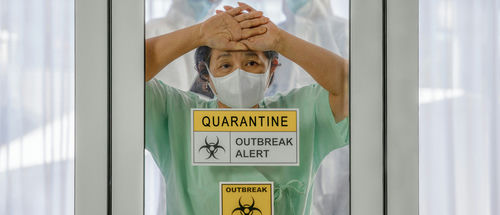
While West Africa struggled with scarcity, the United States confronted a different problem: political grandstanding layered onto public health. The Yale report documents that by December 2014, at least twenty‑three states had announced quarantine or movement restrictions that went beyond Centers for Disease Control and Prevention guidance.[2] The authors concluded those policies were not scientifically justified and, except for Maine, did not meet basic due‑process standards.[2] That history should concern constitutional conservatives: fear and media pressure drove some governors to sidestep evidence and individual rights, even when federal guidance was more measured.
At the same time, academic and policy reviews stress that the core containment tools—case isolation, rigorous contact tracing, and sanitary funeral practices—still work when they are properly resourced and coordinated.[7][8] A National Institutes of Health‑hosted modeling study found that combining prompt isolation with tracing and safe burials was essential to turn the tide in West Africa.[7] The lesson for today’s Trump‑era public health leadership is straightforward: protect the homeland with firm travel screening and clear quarantine rules, but ground every restriction in science, respect for due process, and transparency so Americans are not subjected to arbitrary house arrest by panicked state bureaucrats.
What Must Happen Now To Contain New Outbreaks
Contemporary experts warn that future Ebola flare‑ups, especially in remote or unstable regions, will again stress fragile systems, and that quality of care—not just supplies—often makes the difference between control and chaos.[4][8] Public health intelligence reviews describe recurrent “process failures,” from poor situational awareness to clumsy coordination. For a Trump‑supporting audience that has watched international bodies fumble crises and then demand more power, the answer is not blind trust in Geneva, but targeted, verifiable performance: early detection, published after‑action reviews, and clear accountability when agencies ignore their own playbooks.
$AIDX
20/20 Biolabs Commences Emergency Planning for Ebola & Hantavirus Lab Testing if Outbreak Creates Overflow Demand– 20/20 Biolabs announced contingency planning to add Ebola and Hantavirus PCR testing in its CAP-accredited CLIA lab if public health labs face overflow…
— stock setter (@MarcJacksonLA) May 22, 2026
For Americans, especially retirees and families who bore the brunt of past lockdown‑style policies, the priorities are clear. First, insist that any Ebola or hantavirus response begin with the basics the World Health Organization and Centers for Disease Control and Prevention already endorse: isolation of suspected cases, personal protective equipment for health workers, and safe handling of the deceased.[5][7] Second, demand that Congress and the administration secure borders and ports of entry with smart screening rather than performative theater. Third, require sunlight: staffing rosters, procurement records, and coordination plans should be public so citizens can see whether bureaucrats and global agencies are finally doing their job—or setting us up for another preventable disaster.[1][5]
Sources:
[1] Web – The Ebola outbreak and staffing in public health facilities in rural …
[2] Web – Challenging the US Response to the West African Ebola Outbreak
[3] Web – [PDF] Epic Failure of Ebola and Global Health Security
[4] YouTube – As WHO Declares Ebola Outbreak a Global Health Emergency, Did …
[5] Web – Outbreak History | Ebola – CDC
[7] Web – Ebola virus disease – World Health Organization (WHO)
[8] Web – The Ebola Outbreak, Fragile Health Systems, and Quality as a Cure