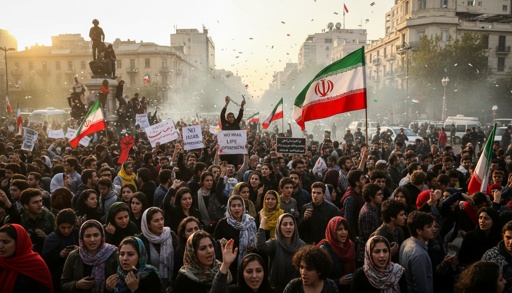
Iran’s brazen seizure of the world’s most critical oil chokepoint has sparked a furious U.S.-led campaign at the United Nations to enforce international law and restore freedom of navigation before global energy markets collapse.
Iran Weaponizes Critical Shipping Lane
Iran’s Islamic Revolutionary Guard Corps has transformed the Strait of Hormuz into a hostage situation, imposing illegal tolls, deploying naval mines, and attacking commercial vessels transiting the 21-mile-wide waterway. The strait handles approximately 21 million barrels of oil daily, representing roughly one-fifth of global petroleum trade. During an April 27 emergency briefing at the UN Security Council, Ambassador Waltz declared Iran’s actions a flagrant violation of the UN Convention on the Law of the Sea, which guarantees transit passage through international straits. UN Secretary-General António Guterres joined the condemnation, demanding Iran immediately cease discrimination against shipping and reopen the waterway without conditions.
Decades of Iranian Aggression Reach Breaking Point
Iran’s current blockade represents the latest escalation in a pattern of maritime aggression dating to the 1980s Tanker War, when the regime mined Gulf waters and attacked neutral shipping. The Trump administration responded by invoking snapback sanctions mechanisms embedded in UN Security Council resolutions, economically isolating Tehran as uranium enrichment approaches weapons-grade levels. Waltz pointed to Iran’s support for terrorist proxies including Hezbollah and the Houthis, whose Red Sea attacks on commercial shipping between 2023 and 2025 disrupted global trade routes. Iran’s Foreign Minister previously promised to halt shipping obstructions during ceasefire negotiations, only to reverse course once agreements were signed, demonstrating the regime’s untrustworthiness in diplomatic commitments.
Global Coalition Forms Against Maritime Extortion
The Security Council session revealed near-unanimous international opposition to Iran’s blockade, with 135 nations supporting enforcement measures against Tehran’s actions. Gulf states including Saudi Arabia, the United Arab Emirates, Bahrain, Qatar, and Kuwait have aligned with U.S. demands for coalition action to restore maritime freedom. Waltz invoked the successful UN-mandated Combined Task Force 151, which suppressed Somali piracy beginning in 2008, as a model for multilateral enforcement. The International Maritime Organization is developing frameworks for ship evacuations and insurance stabilization as the crisis drives up transportation costs. Only Russia and Cuba defended Iran’s position, citing ambiguities in international law that legal experts uniformly reject.
Verification Requirements Block Trust-Based Diplomacy
Speaking on CBS’s “Face the Nation” in late April, Waltz declared the United States would never again adopt a trust-based approach with Iran, citing the regime’s systematic violations of the Joint Comprehensive Plan of Action nuclear agreement. The ambassador emphasized that any future negotiations must include International Atomic Energy Agency verification mechanisms with real-time monitoring capabilities. Iran’s continued enrichment of uranium near weapons-grade purity, combined with attacks on civilian airports, ports, and resorts throughout the Gulf region, has eliminated diplomatic goodwill. The economic pressure from renewed sanctions has created internal chaos within Iran, yet the regime remains defiant in supporting proxy forces across the Middle East while pursuing nuclear capabilities.
Mike Waltz Demands That the United Nations Crackdown on Iran's Violation of International Law https://t.co/dE8UAl7Tiu
— Fearless45 (@Fearless45Trump) May 8, 2026
Economic Fallout Threatens Global Food Security
The Strait of Hormuz blockade has triggered insurance premium spikes and shipping delays that threaten over $100 billion in annual trade flows, with developing nations facing potential food emergencies as import costs surge. Energy importers across Europe and Asia confront supply disruptions that could destabilize markets already stressed by years of inflationary pressure from fiscal mismanagement. The crisis sets a dangerous precedent for waterway weaponization that could extend to flashpoints including the Taiwan Strait and South China Sea. Waltz’s forceful rhetoric has unified Security Council members around enforcement principles, though uncertainty remains about implementation mechanisms if Iran continues its obstruction. The situation tests whether international institutions can effectively counter rogue regimes that exploit critical infrastructure as diplomatic leverage against rules-based order.