
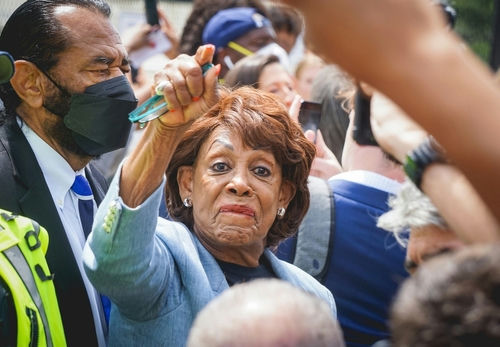
Rep. Maxine Waters just turned a simple age question into a bigger test of political common sense.
Waters Turns a Gotcha Question Into a Principle
TMZ’s Washington, D.C. reporter tried to corner Waters with a question designed for a clean soundbite: is there a point when someone is simply too old to serve? Waters would not take the bait. Her answer was plain and politically durable: if a lawmaker is doing a good job, age alone should not end the conversation. That response matters because it rejects the tabloid setup and shifts attention back to performance, where serious voters tend to land.
🚨 MAXINE WATERS, 87, REFUSES TO RULE OUT A 100-YEAR-OLD RUNNING FOR CONGRESS 😂
This walking fossil is out here dodging age limits and saying voters should just “evaluate” if a centenarian is still an “effective fighter.” pic.twitter.com/QdWWqzXMZ9
— Gunther Eagleman™ (@GuntherEagleman) May 15, 2026
The exchange worked because it touched a nerve that cuts across party lines. Americans have watched older leaders dominate the headlines for years, and many voters now see age as shorthand for stagnation, drift, or detachment. But Waters’ answer also reflects a conservative instinct that still makes sense: judge people by results, not by arbitrary labels. A hard age ceiling may feel satisfying, but it can also punish capable people simply for surviving longer than others expected.
The Debate Is Bigger Than One Congresswoman
Waters is not defending herself in a vacuum. The broader argument over age limits grew out of repeated concerns about health, stamina, and mental sharpness among high-profile officials, including presidents, senators, and Supreme Court justices. That is why the TMZ clip lands so easily. It compresses a national argument into one loaded number: 100. The number is absurd on its face, yet it exposes a real frustration among voters who believe too many powerful offices stay occupied too long.
Constitutionally, the United States sets minimum ages for office, not maximums. That detail often gets lost in the emotional rush of the debate. The system was built to prevent a young republic from being run by people too inexperienced, while leaving voters free to decide when leaders have become too old, too stale, or too disconnected. In theory, that is the right answer. In practice, incumbency and name recognition often protect older lawmakers far more than voters realize.
Why TMZ’s Angle Matters
TMZ understands that political conflict plays well when it feels personal, visual, and slightly ridiculous. That is why the outlet pushed the “100 is too old” framing instead of a dry policy question. It is also why Waters later fit so neatly into Harvey Levin’s anti-entrenchment slogan, “Out With Their Asses.” The phrase is crude, but it is memorable because it targets a real grievance: voters do not just want younger politicians, they want more accountable ones.
That is where the story becomes more interesting than a simple generational jab. Waters is a seasoned operator who knows how to refuse a trap without sounding evasive. She also knows that many Americans, especially younger ones, are not asking for youth worship. They are asking for evidence that leaders can still think clearly, work hard, and fight effectively. On that point, her answer and their frustration are not total opposites. They are competing definitions of the same political standard.
What Comes Next for the Age-Limit Fight
The TMZ clip will likely fade as fast as most viral political moments do, but the underlying issue will not. Age and fitness will keep shadowing Congress, presidential contests, and any conversation about institutional renewal. That leaves reformers with a hard choice: push for blunt legal limits or keep betting on voters to enforce turnover themselves. For now, Waters has reminded critics that age is an easy target, but not always the strongest argument.
Maxine Waters Won’t Say 100 Is Too Old to Serve In Congress During TMZ Grilling #Mediaite https://t.co/L5kSm3J1Hh
— #TuckFrump (@realTuckFrumper) May 14, 2026
For readers who value order, continuity, and merit, the cleaner lesson is straightforward. A country should not confuse longevity with decline, but it also should not excuse obvious decline because of longevity. Waters staked out the first half of that truth. The second half is why the age debate keeps coming back. Voters know instinctively that experience matters. They also know, just as instinctively, when experience has turned into entitlement.
Sources:
ICYMI: Rep. Maxine Waters Discusses George Floyd’s Murder on TMZ Live