Measles, a disease the U.S. beat a generation ago, has roared back to a 34‑year high, exposing how fragile our health system really is when trust, funding, and basic follow‑through break down.
Story Snapshot
- Measles cases in 2025–2026 are the highest since the early 1990s, ending a quarter‑century of “elimination” success.
- Over 90% of recent U.S. measles patients are unvaccinated or have unknown vaccination status, showing deep immunity gaps.
- National measles, mumps, and rubella (MMR) vaccine coverage has slipped below the 95% target needed to stop outbreaks, especially in certain communities.
- Experts warn the U.S. is likely to lose its measles “elimination” status after more than a year of continuous domestic transmission.
Measles Numbers Are Now the Worst in Decades
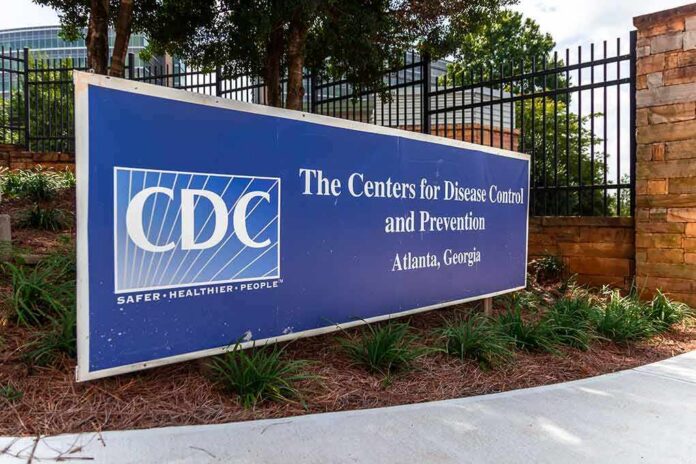
Centers for Disease Control and Prevention (CDC) data show how fast measles has returned. In 2024, the U.S. reported 285 measles cases. In 2025, that jumped to roughly 2,200–2,300 cases, the highest yearly total since the disease was declared eliminated in 2000. By July 9, 2026, CDC figures cited by major outlets showed 2,231 cases, nearly matching the entire 2025 total with months still left in the year. This marks the largest measles burden in more than 30 years.
Measles cases are also spread across much of the country. In early 2026, CDC updates showed infections in more than two dozen states, with outbreaks driving most cases. One South Carolina outbreak linked to the 2025–2026 wave reached nearly 1,000 cases by spring, making it the largest single U.S. measles outbreak since elimination. Reporters note that experts believe actual infections may be several times higher than confirmed counts because not every case is tested or reported.
How Elimination Was Won — And How It Is Being Lost
Measles “elimination” does not mean zero cases. It means no continuous local spread for at least 12 months, with strong tracking systems in place. The CDC and outside panels credited very high two‑dose MMR coverage for the 2000 elimination milestone. Two doses of the measles, mumps, and rubella vaccine are about 97% effective at preventing measles, which made routine outbreaks rare when most children received them on time. For more than a decade, the country held that line and kept measles under tight control.
Recent data show that protection has slipped. The federal goal is 95% MMR coverage in young children to block sustained spread. During the 2024–2025 school year, only 92.5% of U.S. kindergartners were documented as vaccinated. CDC reports also highlight record levels of exemptions from school vaccine rules. Researchers warn that years of slow decline in coverage, especially in certain counties and communities, have opened gaps large enough for measles to move again.
Unvaccinated Pockets Are Driving the Outbreaks
Health agencies and studies agree on one core pattern: measles finds under‑vaccinated groups. Communication resources from public health organizations stress that U.S. measles outbreaks are “most common in communities where larger groups of people are unvaccinated.” In the South Carolina and national 2025–2026 waves, more than 90% of cases were among people who had not received the MMR vaccine or whose status was unknown. A CDC analysis of early 2025 data found over 90% of patients were unvaccinated or of unknown status, mostly children and teens.
Researchers describe these clusters as “pockets” of low herd immunity. They link them to issues like vaccine hesitancy, misinformation, barriers to health care, and local policies that make it easier to skip vaccines. When measles is brought in by travel, these pockets can sustain spread instead of stopping it quickly. That is why experts say declining MMR coverage and under‑vaccinated communities are the main engines of the current resurgence, even though imported cases still serve as the spark.
Signs the U.S. Is Losing Its Measles Elimination Status
Because measles elimination is a status, not a trophy, it can be lost. Published analyses now warn the U.S. is “highly likely” or “on track” to lose that status when regional health bodies review data. The country has already met the technical condition: more than a year of ongoing domestic transmission without a clean break. Kaiser Family Foundation analysts note that recent years have seen more and longer outbreaks than in the decade right after elimination, reflecting a system under strain.
Experts are blunt about what this means. Losing elimination signals that the U.S. no longer stops measles reliably and quickly. It also suggests deeper problems in public health capacity, from funding cuts to uneven access and weakened trust. Some researchers warn that if immunization rates fall further, other diseases once pushed to the brink — such as rubella and polio — could also return in meaningful numbers. For families, the risk is simple: more children in the hospital, more chances of lasting harm, and more avoidable deaths.
Where This Fits the Bigger Breakdown People See
The measles surge feeds into a wider feeling that the system is failing ordinary Americans. Studies on the resurgence point to missed childhood shots during the COVID‑19 years, weaker local health departments, and a wave of online disinformation that left many parents confused or distrustful. These problems cut across party lines: rural counties, urban neighborhoods, religious communities, and politically mixed areas have all seen under‑vaccinated pockets and hard‑hit outbreaks.
**Yes, there have been several notable measles outbreaks in U.S. immigration detention centers (mostly ICE facilities), especially during the broader 2025–2026 national measles resurgence.**
### Key Examples from 2026:
– **Texas facilities**: Multiple reports of cases, including…— nonfood99 (@nonfood99) July 16, 2026
For many on both the right and the left, this story is not just about one virus. It reflects a government that struggles to handle basic tasks — from keeping vaccines on track to explaining risks clearly and backing up local clinics when crises hit. The measles comeback shows how quickly decades of progress can slip when leadership is distracted, trust erodes, and long‑term public health work is treated as an afterthought instead of a core promise to the public.
Sources:
sciencenews.org, cdc.gov, tandfonline.com, pmc.ncbi.nlm.nih.gov, publichealthcollaborative.org, cnn.com, scientificamerican.com, cidrap.umn.edu, abcnews.com, kff.org, youtube.com, publichealth.jhu.edu, pubmed.ncbi.nlm.nih.gov, innovapath.us, milbank.org, health.harvard.edu, med.stanford.edu, academic.oup.com