
Federal prosecutors say a California charity raised $600,000 “for Gaza” while secretly routing money to Hamas, sharpening fears that even good‑hearted giving can be turned against the American people.
Story Snapshot
- The Department of Justice charged a San Diego man with using a Gaza “charity” to send money to Hamas and pay personal bills.
- Prosecutors say he raised about $600,000 online, sent roughly $116,000 to a Hamas member, and tried to move $382,000 through cryptocurrency.[3]
- The case fits a long pattern of extremists misusing charities, but it also rides on accusations that have not yet been proven in court.[5][16]
- Both the right and the left see a deeper problem: a powerful security system that can miss real threats, target speech, and still leave ordinary Americans exposed.[21][22]
What Federal Prosecutors Say Happened
The Department of Justice says Reda Mazen Rida Sabassi, a 38‑year‑old San Diego resident, ran online fundraisers and a group called Ikram – The Arab Charity Foundation Inc., claiming to raise money for humanitarian aid in Gaza.[3] According to the criminal complaint, he used social media, crowdfunding sites, and his nonprofit’s name to solicit donations from people in the United States and overseas.[1][5] Prosecutors say these campaigns surged after the October 7, 2023 Hamas attacks on Israel.[1][5]
Government filings allege that between December 2023 and February 2024, Sabassi raised about $600,000 through these online campaigns.[1][3] Of that amount, prosecutors say he sent roughly $116,000 to a Hamas member and tried to convert about $382,000 into cryptocurrency to send to Hamas through “Gaza Now,” which the government calls a Hamas‑linked fundraising network.[1][3][5] Officials also claim he diverted some money for personal expenses like rent and a personal credit card.[2][5]
Why This Case Pushes So Many Hot Buttons
This case lands at the intersection of many frustrations that both conservatives and liberals already share. Conservatives see yet another example of a system that let a supposed charity raise hundreds of thousands of dollars online before anyone stopped it, even as ordinary Americans face heavy banking rules and audits.[17][24] Liberals see powerful national‑security tools being used in ways that may chill genuine humanitarian giving and political speech, especially around controversial conflicts like Israel and Gaza.[17][22]
Researchers have warned for years that extremist groups abuse charities and “humanitarian” branding to move money, exploiting donor trust and weak oversight.[16] At the same time, civil‑liberties advocates say anti‑terror financing rules often sweep too broadly and scare donors away from legitimate causes, especially overseas relief.[17][20][22] Many Americans on both sides look at this mix and see a federal system that is both heavy‑handed and strangely ineffective, punishing rule‑followers while clever actors slip through.
Patterns of Charity Abuse – And Government Overreach
Academic work and past cases show that extremist networks have long used nonprofit groups and charity appeals as fronts to fund violence.[16][7] Terror groups know that “charity” suggests kindness and trust, making it easier to raise and move money with less suspicion.[16] After the September 11 attacks, the United States and its partners froze assets, shut down dozens of suspect charities, and tightened global rules in the name of blocking terror finance.[17][24]
But these crackdowns came with costs. Legal analyses note that United States anti‑terror finance rules are often vague, telling charities not to work with anyone “associated with” terrorism without clearly defining that term.[17][20] Major foundations now screen grantees against long government lists and fear serious penalties if any money is later linked to a blacklisted person or group.[18] Civil‑liberties groups argue this climate deters legitimate aid, especially in war zones where civilians need help most.[17][22]
How The Government Is Framing The Case
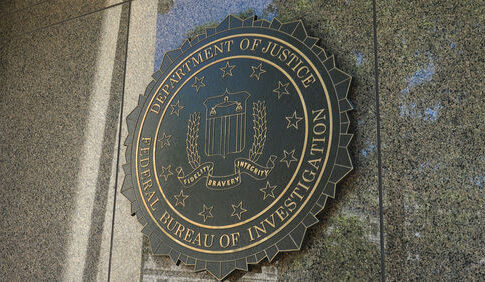
The Justice Department and Federal Bureau of Investigation have presented the Sabassi case as a clear national‑security story: a man who “exploited” the October 7 terror attacks to raise money “for Gaza,” but then sent it to Hamas and kept some for himself.[1][3] Officials say the case is being handled by special units focused on illicit finance and national security, which signals how seriously they frame it.[3] Social‑media posts from the FBI repeat the allegations and highlight the Hamas connection.[1][7]
The Palestinian genocidal Hamas terrorist fundraiser plot gets bigger by the hour. Hamas terrorist fundraiser Reda Sabassi was employed with Booz Allen Hamilton.
Reda Mazen Rida Sabassi, 38, was charged with terrorism, sanctions evasion, wire fraud, money laundering and making… https://t.co/DL9yyD6eCL pic.twitter.com/5KIh4DFOQR
— Saint James Hartline (@JamesHartline) June 18, 2026
This kind of messaging has real impact on public opinion. Even though the filing is only a complaint, not a conviction, many people will hear “Hamas,” “terrorism,” and “fake charity” and assume guilt long before a trial tests the evidence.[3][8] That pattern fits a wider worry shared by people across the spectrum: once the government puts its thumb on the scale, repeating its story through press releases and media allies, ordinary citizens and small groups have little chance to push back, even when facts are still in dispute.[21][22]
Sources:
[1] Web – California Man Allegedly Raised $600K For Terrorist Regime Hamas: DOJ
[2] Web – CASE UPDATE from FBI – New York and FBI – Facebook
[3] Web – New York: US federal prosecutors announced terrorism charges …
[5] Web – San Diego man charged for laundering charity money to Hamas
[7] X – FBI New York
[8] Web – FBI – San Diego – Facebook
[16] Web – Misuse of charitable giving to finance violent extremism – PMC – NIH
[17] Web – Deterring Donors: Anti-Terrorist Financing Rules and American …
[18] Web – Our Response to Anti-Terrorism Financing Guidelines
[20] Web – [PDF] Chapter 4 – Charity & Security Network
[21] Web – [PDF] Attacks on Freedom of Speech: What Nonprofits Need to Know
[22] Web – Congress Must Rein in Anti-Terrorism Financing Laws | ACLU
[24] Web – Protecting Charitable Organizations | U.S. Department of the Treasury