
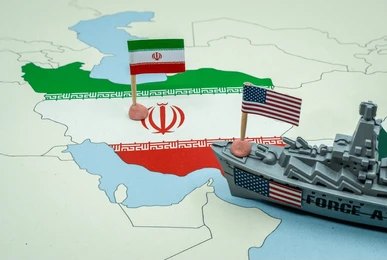
Trump is calling his new Iran deal “unconditional surrender,” but the actual text looks a lot more like a temporary truce that gives Tehran breathing room and cash.
Story Snapshot
- Trump says the Iran memorandum is “unconditional surrender,” but it is written as a 60‑day ceasefire and negotiation framework, not a final surrender document.
- The deal reopens the Strait of Hormuz and lets Iran restart major oil sales and access frozen assets, easing pressure on the regime.
- Iran promises not to build nuclear weapons, yet key nuclear limits, inspections, and long‑term enrichment rules are kicked to later talks.
- Critics warn that mutual concessions and secret details make it look more like a risky compromise than a one‑sided win for the United States.
What Trump Is Claiming Versus What the Deal Says
President Trump told Axios that the agreement with Iran is basically “unconditional surrender” and boasted that his authority in handling the deal has “no limits.”[4] The written document, however, is a 14‑point memorandum of understanding, not a surrender treaty. It sets up a 60‑day ceasefire, reopens the Strait of Hormuz, and lays out a framework for more talks on nuclear issues and other disputes, with many details left for future negotiation.[4][11]
The memorandum was digitally signed by Trump and Iran’s president and is already described as “operational,” which means both sides are treating it as a real, working agreement.[11] It declares an immediate halt to military operations and calls for reopening vital shipping lanes so global oil and goods can move again.[1][11] This structure looks like a ceasefire and road map between two bargaining parties, not like the kind of total capitulation most people think of when they hear “unconditional surrender.”
What Iran Gets: Oil, Money, and Time
The biggest immediate winner in the memorandum is Iran’s struggling economy. The deal allows Tehran to restart large oil exports, bringing in billions of dollars in revenue after months of war and sanctions.[1][2] The text also describes a path for Iran to regain access to frozen assets that have been locked up for years, with releases happening on a schedule agreed by both governments and their partners.[4][5] For a regime that just survived a clash with the world’s strongest military, that relief is a major lifeline, not a punishment.
The memorandum goes even further by committing the United States and regional partners to work up a reconstruction plan worth at least three hundred billion dollars to repair Iran’s damaged economy and infrastructure.[11][16] A senior official stressed that this does not mean direct U.S. checks to Tehran, but it still signals a huge pool of future investment and aid tied to the final deal.[11] Former Secretary of State Antony Blinken argued that the “only achievement” so far is reopening the Strait of Hormuz, and that Washington is now effectively paying Iran with sanctions waivers to do what it should never have closed in the first place.[1]
What Iran Gives Up: Promises, But With Big Gaps
On paper, Iran accepts clear limits. The memorandum says Iran will not procure or develop nuclear weapons, a core Trump demand.[3][4] It also requires Iran to halt high‑level enrichment in the short term and to down‑blend some of its more dangerous uranium stockpile under monitoring from the International Atomic Energy Agency.[11] Trump and his allies point to these clauses, plus his threat to “go back to bombing” if Iran cheats, as proof that he forced Tehran to bend to American terms.[6]
But key nuclear questions remain wide open. Reports show that the deal does not yet settle how long Iran must pause enrichment, how much uranium it must give up, or how far inspections can go into secret sites.[11][16] A Council on Foreign Relations analysis notes that the toughest issues—long‑term enrichment caps, dismantling nuclear facilities, and strict inspection rights—are left to the 60‑day negotiation window after the ceasefire.[16] That means the most dangerous parts of Iran’s program are still “to be determined,” even as sanctions pressure eases and oil money starts to flow again.
Why Critics Say This Is Not ‘Unconditional Surrender’
Conservatives who supported Trump’s hard line on Iran are split over this deal. Some see it as a smart way to stop the shooting while keeping U.S. leverage. Others, including Republican Senator Bill Cassidy, call it a “tremendous foreign policy blunder” because it lifts all U.S. sanctions, lets Iran keep enriching uranium, and sets only a 60‑day goal for a final agreement.[12] Cassidy warns that Iran could come out “stronger” while American allies like Israel and Gulf partners end up “weaker.”[12]
🇺🇸 U.S. and Iran sign initial pact to de-escalate conflict
What happened:
President Trump and Iranian President Pezeshkian signed a memorandum of understanding on June 17, 2026, to end the U.S.-Iran war. Vice President Vance appeared as co-signatory and later defended the deal… pic.twitter.com/jGLOUwztvG— The States Brief (@TheStatesBriefX) June 19, 2026
Foreign policy hawks note that “unconditional surrender” usually means the losing side accepts all terms, gets no concessions, and admits defeat. Here, the United States and Iran both make promises, both get benefits, and both keep bargaining power. Analysts point out this is a classic negotiated framework, not a one‑sided capitulation, and worry that once sanctions are loosened it will be harder to force Iran into tougher nuclear limits later.[2][19] Even sympathetic commentators admit that the text looks far more like a truce with open‑ended talks than the total victory Trump once demanded.[1][26]
Sources:
[1] Web – Trump claims Iran deal ‘probably is unconditional surrender’
[2] Web – Key takeaways from the 14-point memorandum of understanding …
[3] Web – Read the Full Text of the 14-Point Agreement Between the U.S. and …
[4] Web – US-Iran memorandum of understanding in full – BBC
[5] Web – US releases official agreement with Iran. Read the 14-point text | CNN
[6] Web – Trump and Iran’s president sign initial deal to end war, open Strait …
[11] Web – Criticism Of Trump’s Iran Deal Grows From All Sides As … – Forbes
[12] Web – Initial US-Iran agreement leaves many key issues to be negotiated
[16] Web – How is Trump’s Iran deal different from the Obama agreement? https …
[19] Web – Trump to Axios: “Unconditional surrender” is when Iran “can’t fight …
[26] Web – Trump says there will be no deal with Iran except ‘unconditional …