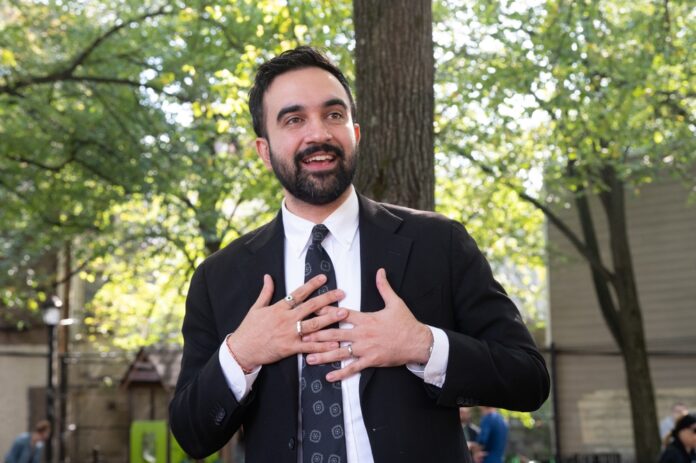
New York Mayor Zohran Mamdani is pressing a sweeping democratic socialist agenda while claiming Wall Street can still work with him.
Story Highlights
- Mamdani reaffirmed his democratic socialist identity and pledged to govern by those ideals.
- His plan raises corporate and top-earner taxes to fund free buses, universal childcare, and housing.
- Business leaders warn higher taxes could push jobs and wealth out of New York City.
- Key powers, like tax changes, require state approval, creating major hurdles.
Mamdani’s Pledge to Govern as a Democratic Socialist
CNN reported that Mayor Zohran Mamdani publicly reaffirmed he is a democratic socialist and said he will govern by those ideals. He doubled down during his 100-day rally, echoing his inauguration message of equity and affordability for working families. His platform promises debt relief for taxi medallion owners, tougher rent control, and a Social Housing Development Agency to build 200,000 affordable units. He argues the city must deliver core services first, then invite business to partner on growth on those terms.
His agenda extends to sweeping cost-of-living moves. Plans include a rent freeze for nearly one million rent-stabilized apartments, which he called his most straightforward promise to fulfill. He also backs city-run grocery stores to sell essentials without a profit motive, as part of a broader affordability push. Supporters say these steps fight price gouging and give families breathing room. Critics counter that government-run stores risk waste and shortages if scaled too fast.
Big-Ticket Programs and How He Says He Will Pay
Mamdani proposed universal childcare for children six weeks to five years old. Britannica reported it could cost about six billion dollars each year, funded by higher taxes on the wealthy. He promised to make city buses free for riders, at an estimated eight hundred million dollars per year, paid for by increased taxes on corporations and affluent residents. The mayor also wants the minimum wage to reach thirty dollars per hour by 2030, arguing higher pay will help families keep up with rising costs.
His tax plan targets corporations and top earners. Reporting says he wants to raise the corporate tax rate from seven point two five percent to eleven point five percent, generating five billion dollars each year, and add a two percent flat tax on the top one percent of earners for another four billion dollars. These numbers aim to cover childcare, transit, and housing promises. The plan rests on the claim that the wealthy and big companies will stay and pay, while the city expands services.
Promises Meet Legal Limits and Market Reality
CNN noted the mayor lacks independent power to raise or cut taxes. Any tax change requires support from Governor Kathy Hochul and the state legislature. That means his funding hinges on Albany’s approval, not just City Hall. Without state law changes, several marquee items may stall or shrink. This political roadblock stands alongside practical tests, like finding qualified staff, securing land for housing, and managing long timelines for large public works.
Business leaders have voiced concern that higher taxes on companies and the wealthy could push jobs, investment, and high earners out of New York City. Economists who oppose a rapid wage hike warn a thirty-dollar floor could reduce entry-level hiring and speed automation, hitting young and low-skill workers hardest. The city-owned grocery plan has drawn doubts about scaling and cost control, raising questions about supply chains, union contracts, and long-term subsidies. These tensions challenge the mayor’s claim that Wall Street and his agenda can move in lockstep.
Where Cooperation Might Work—and Where It Could Break
Mamdani says business can work with his city if rules are clear and programs cut costs for families. He points to rent freezes, fare-free buses, and childcare as tools to stabilize neighborhoods and keep workers in the city’s core industries. Supporters describe this as “sewer socialism,” focused on basic services, not ideology. National coverage shows similar left-leaning victories in other cities, where affordability voters want faster fixes and direct benefits.
NYC Mayor Zohran Mamdani: “I think that for all of the fear-mongering around Democratic Socialism, the best response is to show what it actually means… A democratic socialist vision is one that paves more than 170,000 potholes.”
Don’t forget the homeless encampments that line… pic.twitter.com/OwsoiPsxGX
— Sergeant News Network (@SGTnewsNetworks) July 19, 2026
Whether cooperation lasts remains uncertain. BBC reporting flagged doubts about keeping wealthy taxpayers and firms in place under higher rates, even if near-term markets remain strong. If Albany blocks tax hikes, the mayor must cut ambitions or find new revenue. If taxes pass and revenues miss targets, service cuts or new levies could follow. For families, the stakes are simple: Do these promises lower daily costs without killing jobs or chasing away the city’s tax base? Answers will come in budgets, not rallies.
Sources:
foxnews.com, theguardian.com, britannica.com, cnn.com, bbc.com, nytimes.com, lemonde.fr