
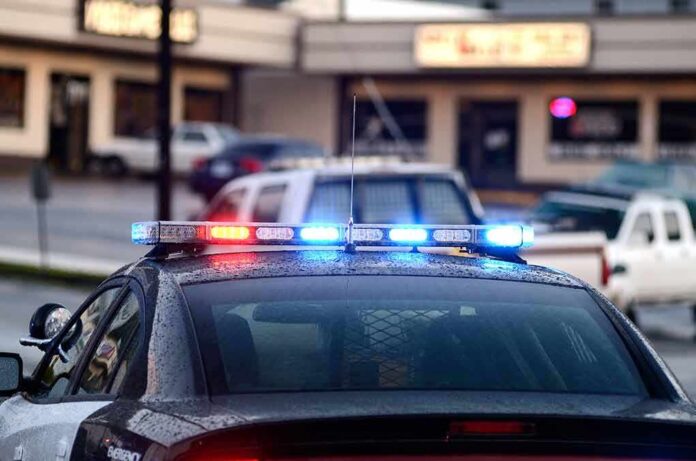
In Georgia, officers sworn to protect the public keep getting arrested for using powerful Flock surveillance cameras to track people in their personal lives, raising fresh alarms about who really controls modern spying tools.
Story Snapshot
- At least 18 Georgia officers have been arrested in recent months for misusing Flock license plate data for personal reasons.
- Internal audits, not outside watchdogs, are catching many abuses inside police departments.
- Cases include officers and even a police chief accused of stalking romantic partners and private citizens with Flock cameras.
- The pattern fuels growing left–right concerns that mass surveillance tools are open to abuse and weakly controlled.
Wave of Georgia Arrests Over Misused Flock Surveillance
Georgia has become a test case for what happens when powerful surveillance tools spread faster than real oversight. In just a few months, at least 18 law enforcement officers across the state have been arrested for misusing Flock Safety camera data, often to look up or track people in their private lives rather than for real police work. These arrests stretch from big metro counties to smaller cities, showing that the problem is not limited to one rogue department but appears across the system.
The Georgia Bureau of Investigation and local agencies describe similar patterns in case after case. In Albany, five former police officers were charged with misuse of license plate data and violation of their oath of office after an internal audit found they used Flock camera data for “non-law-enforcement purposes.” In DeKalb County, a sheriff’s sergeant was fired and charged for allegedly misusing Flock license plate reader technology, facing both misdemeanor and felony counts tied to his sworn duties. Each case adds to the sense that some officers see this data as a personal search engine, not a public trust.
How Internal Audits Keep Catching Misuse
Many of these abuses only came to light because police departments turned Flock’s own audit tools on their officers. In Albany, the department requested a Georgia Bureau of Investigation probe after its audit flagged repeated, non-investigative access to license plate data by several officers. A news report on Georgia’s wider pattern notes that many recent arrests happened after departments used Flock’s “audit assistance” feature, which can flag unusual search behavior inside the database. In Fayetteville, three officers were fired after a new audit tool showed they had run their own tags or those of friends, with no valid law enforcement purpose.
The audits’ findings are striking because they reveal how easy it is for insiders to misuse a system built to watch everyone else. One television report described a statewide “audit feature” that exposed misuse across multiple agencies, including Albany, Greene County and Cherokee County, triggering criminal charges and internal discipline. These tools let departments see who searched what plates and when, but they only work if leaders are willing to look and act. The fact that audits are catching so many cases at once suggests the problem may have been building quietly for years.
Stalking Allegations and Real-World Harms
Some Georgia cases go beyond simple curiosity and into alleged stalking and harassment. In Cherokee County, two supervisors and a deputy were fired and arrested after investigators said they used Flock cameras to track car tag numbers outside official police business, including saving data they gathered illegally. A separate report describes a Braselton police chief who resigned and was then charged with stalking, sending harassing messages, misusing automated license plate systems, and violating his oath as a public officer after allegedly using city cameras to target private citizens. These stories show how a tool sold as crime-fighting technology can become a weapon in personal disputes when guardrails fail.
#new Multiple police officers have being terminated nationwide for using Flock Safety cameras to stalk romantic partners, family members and friends, sparking people to call for the complete removal of Flock Cameras.#cameras
🔷️In Fayetteville, Georgia, on July 17 three… pic.twitter.com/bgiE1sd6n5
— Christina Aguayo (@ChristinaNewstv) July 24, 2026
Other cases show different kinds of harm. In Sandy Springs, a reserve sergeant was terminated after an internal investigation found he used the city’s Flock login to run plates and gather data for another job, raising concerns about corporate espionage and improper sharing of sensitive information. Atlanta News First Investigates says it has identified at least 20 Georgia cases in the past year tied to improper use of the Flock database, including accusations of tracking romantic partners and acquaintances. When officers can quietly follow people’s movements with a few clicks, the line between “public safety” and “personal spying” becomes dangerously thin.
Why This Trend Fuels Deep Public Distrust
Reports on these cases land in a country already split by politics but increasingly united in one belief: powerful tools in government hands are often used for the benefit of insiders, not ordinary citizens. Flock cameras build a searchable record of where cars travel, creating a map of people’s daily lives that many find unsettling. When officers misuse that data for personal reasons, it validates fears across the political spectrum that surveillance meant to fight crime can instead be turned on regular people, including critics, ex-partners or business rivals.
That shared worry explains why both conservatives and liberals question whether mass surveillance systems can ever be trusted without strict rules and transparent oversight. For people on the right, these cases reinforce concern that a growing “deep state” has tools to track citizens far beyond traditional policing. For people on the left, they highlight how technology can deepen power imbalances and expose vulnerable people, such as stalking victims, to new forms of control. Georgia’s string of arrests shows that even with audit tools in place, it takes constant outside pressure to keep “watch the watchers” from being just a slogan.
Sources:
reason.com, jalopnik.com, usatoday.com, fox5atlanta.com, youtube.com, ajc.com, instagram.com