
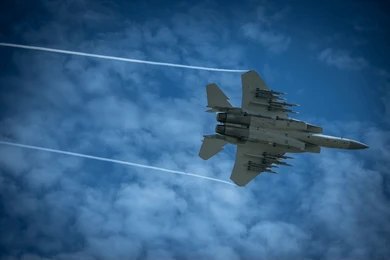
Two Boeing F-15EX Eagle II fighters have landed at Kadena Air Base as part of preparations for the Air Force’s planned deployment of the aircraft to Japan.
Quick Take
- Two F-15EX Eagle II jets arrived at Kadena Air Base for training and familiarization.
- The 18th Wing said the visit was meant to prepare personnel for the aircraft’s future arrival and sustainment.
- The Air Force said the visit set the stage for 36 F-15EX aircraft to arrive in spring 2026.
- The aircraft returned for additional training in 2026 as preparations for the planned transition continued.
Training Run Before a Bigger Shift
Two F-15EX Eagle II fighters from the 85th Test and Evaluation Squadron landed at Kadena Air Base for integration and familiarization training. The Air Force said the short visit was meant to prepare Kadena crews for the aircraft’s future arrival and long-term support. It also framed the move as part of a wider effort to modernize airpower in the Indo-Pacific and strengthen U.S. readiness in an increasingly competitive Indo-Pacific security environment.
The F-15EX is not a small upgrade. Boeing says the jet brings modern mission systems, open architecture for upgrades, and a large weapons load. That matters at Kadena because the base sits in a key spot for watching the East China Sea and supporting Japan’s defense. Supporters of the modernization effort argue the deployment represents another step in updating U.S. airpower in the region.
Why Kadena Matters
Kadena has long been one of the most important American air bases in the Pacific. The 18th Wing said the F-15EX visit gave pilots and maintainers a chance to train in the same place they would later operate the jet every day. That kind of real-world practice helps with maintenance, mission support, and flight integration before the permanent force arrives. It also gives commanders a better sense of how the jet works in a forward-deployed environment.
The Air Force said the visit set the stage for the permanent arrival of 36 F-15EX aircraft at Kadena in spring 2026. That plan would replace older F-15C and F-15D fighters at the base. In plain terms, Washington is shifting from aging airframes to a newer version of the Eagle that can carry more weapons and use better electronics. For a region shaped by China’s military growth, that is not a cosmetic change.
A Broader Indo-Pacific Message
The deployment also sends a message beyond Okinawa. Air Force officials said the training visit was a milestone in the effort to deter evolving threats and strengthen U.S. air dominance in the region. The aircraft later returned to Kadena in June 2026 for more training, which shows the transition plan is still active and indicating the transition effort remained ongoing. That repeat visit suggests the Air Force wants crews ready before the permanent force arrives.
Modernizing the skies ⚡️✈️
A U.S. Air Force F-15EX Eagle II and F-15E Strike Eagles assigned to the 85th Test and Evaluation Squadron travel to Kadena Air Base, Japan, for integration and familiarization training with local units and joint partners.
📍 Japan
📸 Staff Sgt. Dwane… pic.twitter.com/pBUzTzkofM— U.S. Pacific Command (@USPACOM) June 30, 2026
Defense reporting has also noted that the F-15EX rollout at Kadena has not been perfectly smooth, with timelines shifting as production and delivery plans change. Even so, the core mission has stayed the same: prepare a forward base near China with a heavier, more modern fighter force. Supporters of increased U.S. military investment view the Kadena deployment as an important step in strengthening forward-based airpower in the Indo-Pacific.
Sources:
19fortyfive.com, theaviationist.com, dvidshub.net, kadena.af.mil, pacom.mil, facebook.com, usafe.af.mil, instagram.com, x.com, armyrecognition.com, airandspaceforces.com, af.mil, stripes.com, skytrailer.nl, linkedin.com, reddit.com, war.gov
Where is the new F45 fighter being built?