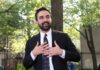

Michigan State Senator Mallory McMorrow, a Democrat running for U.S. Senate, faces scrutiny after deleting approximately 6,000 social media posts that reveal disparaging comments about middle America and raise questions about when she actually became a Michigan resident.
Conflicting Residency Timeline Emerges
McMorrow claims in her 2025 autobiography that she relocated permanently to Michigan in 2014. However, archived social media posts tell a different story. The deleted tweets show McMorrow describing herself as a California resident as late as July 2016. She referenced voting in California’s June 2016 Democratic primary, urged others to register for that election, and identified herself as a constituent of California Representative Ted Lieu. Public records confirm she did not register to vote in Michigan until August 2016, more than two years after her claimed permanent relocation date.
Remarks About Her Adopted State
The deleted posts reveal McMorrow’s apparent disdain for the region she now seeks to represent. On January 5, 2017, she wrote that events made her miss California even more. In another removed post, she described a dream where the United States broke apart, with coastal areas separating from middle America. Perhaps most troubling for a candidate in Michigan, the heart of America’s auto industry, McMorrow wrote that she was pushing for a future where people don’t own cars, declaring that cars are dead. She also responded to a tweet suggesting California should have its own diplomats with agreement, again expressing how much she missed California.
Pattern of Controversial Statements
The social media scrubbing follows other controversial statements from McMorrow. In December, she publicly admitted she wouldn’t be able to control herself if she encountered Supreme Court Justices Amy Coney Barrett and Brett Kavanaugh in public, even joking about throwing beer cans at them. The combination of residency questions and disparaging comments about the people and industries of Michigan raises concerns about her connection to the state she claims to call home and the voters she seeks to represent in Washington.