
A New York man’s live-streamed death threats against Donald Trump Jr. show how political rage, online platforms, and federal power are colliding in ways that worry Americans on both the right and the left.
Story Snapshot
- The Department of Justice charged a Rochester man after he allegedly threatened to kill Donald Trump Jr. during a live Rumble stream.
- Prosecutors say the man repeated graphic death threats in video and chat for about eight minutes, targeting Trump Jr. and the chief executive of Rumble.
- This case is part of a sharp rise in federal prosecutions for violent threats against public officials, many now made on social media.
- The incident raises hard questions about free speech, online moderation, and a justice system many Americans already see as serving elites, not regular citizens.
Federal Charges Over Live-Streamed Threats
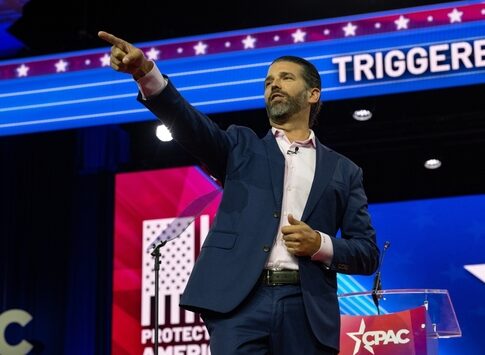
U.S. Attorney Michael DiGiacomo in New York’s Western District announced that 39-year-old James Gerald Eckert Jr. of Rochester was arrested and charged by criminal complaint with making threats to kill, kidnap, or seriously harm a member of the President’s immediate family. The charge carries a maximum sentence of five years in federal prison if he is convicted. The Department of Justice says this case centers on a live Rumble stream tied to Donald Trump Jr.’s political podcast, “Triggered with Donald Trump Jr.”
According to the criminal complaint, on June 18, 2026, a United States Secret Service officer on duty at Donald Trump Jr.’s residence was alerted that several threats had been posted in the group chat of Trump Jr.’s Rumble podcast. The posts allegedly included statements such as “im going to kill you” and “I am going to kill this [expletive] on the screen.” Prosecutors say an account using the name “JamesGeraldEckertJr/@JamesGeraldEckertJr” made those comments and was also streaming video at the same time.
What Prosecutors Say Happened on Rumble
Federal officials say that while watching Trump Jr.’s show on Rumble, the account linked to Eckert Jr. broadcast an eight-minute video where he repeated similar threats both verbally and in the live chat. The complaint alleges he targeted Trump Jr. and the chief executive officer of Rumble, saying things like “your [expletive] dead, its over guys” and promising to “still…kill Trump Junior.” Another comment reportedly read, “You are going to die,” which helped trigger the Secret Service alert.
The Department of Justice press release directly ties the username to Eckert Jr., but so far it has not publicly shared detailed digital evidence such as internet protocol addresses, device records, or login history that prove who controlled the account at every moment. The government also has not released the full video or complete chat logs to the public, so most people must rely on the official summary, not raw footage. For citizens across the political spectrum who already distrust federal agencies, this gap between what the government says it has and what people can see themselves will likely deepen skepticism.
Part of a Growing Wave of Political Threat Cases
This Rochester case is not happening in a vacuum. Federal data reviewed by researchers at West Point shows that yearly federal charges for threats against public officials rose from an average of 38 per year between 2013 and 2016 to about 62 per year between 2017 and 2022. Many of these cases now involve social media posts, live streams, or direct messages instead of phone calls or letters, marking a clear shift in how political anger turns into potential violence.
Before his arrest for threatening Donald Trump Jr., the man allegedly posted threats against Rochester Mayor Evans and New York State Senator Samra Brouk. https://t.co/9HcoD1Te7G
— News10NBC (@news10nbc) July 13, 2026
Other recent cases show this pattern cutting across ideology and party lines. In West Virginia, Cody Lee Smith admitted he posted social media threats to kill President Donald Trump and harm Immigration and Customs Enforcement agents, even sending Donald Trump Jr. a direct message with a sexually violent threat. In Pennsylvania, Shawn Monper was charged after a series of posts and videos where he talked about “American Revolution 2.0” and threatened to assassinate Trump and shoot Immigration and Customs Enforcement personnel. These examples suggest a growing culture where extreme political talk online is sliding into criminal behavior.
Free Speech, Fear, and a Failing System
Federal law makes it a felony to threaten government officials, including the President and his family, whether the threat is spoken or typed. Most Americans agree that real threats of murder cross any free speech line. At the same time, both conservatives and liberals worry that the justice system often feels selective, harsh on some people and forgiving toward others with money or influence. They see agencies like the Department of Justice and the Secret Service as part of a “deep state” that can be weaponized against political enemies.
For many on the right, this case will look like one more example of the Trump family living under constant attack, from white powder mailings to online death threats, while media outlets downplay danger when it targets conservatives. For many on the left, the same case fits a broader concern that political violence and extremist rhetoric are spinning out of control, fueled by platforms that profit from outrage but rarely protect ordinary users. Both sides see a system that reacts after the fact, charging lone individuals while ignoring the deeper anger, inequality, and corruption that keep pushing people toward the edge.
Online Platforms and Accountability
Rumble now joins a long list of platforms, from YouTube to smaller social networks, where violent threats against public figures have led to federal charges. The Eckert Jr. complaint suggests the threats stayed live for most of an eight-minute video, raising questions about how quickly platforms spot and remove such content. Critics will ask whether these companies do enough to protect targets and users, or whether they wait until law enforcement steps in.
At the same time, tighter policing of speech by platforms or by the government raises its own risks. Many Americans fear that rules meant to stop true threats can be stretched to silence strong but lawful dissent. They see a justice system that cracks down on individuals like Eckert Jr. or Smith but seems slower to confront powerful players when they lie, cheat, or manipulate the economy. This case, like so many others, lands in that tense middle ground where people demand safety from violence and also fear the tools used to provide it.
Sources:
thegatewaypundit.com, justice.gov, news.sky.com, whitehouse.gov, politico.com