
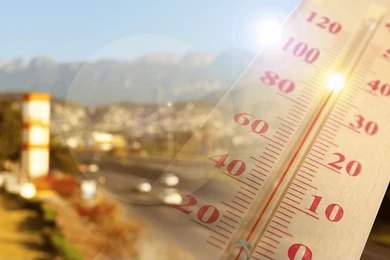
As Europe bakes under yet another deadly heatwave, many ordinary families see the same old pattern: leaders talk, people die, and the most vulnerable pay the price.
Story Snapshot
- Spain, France, Italy, and Greece are on high alert after multiple heat-related deaths and wildfires over the weekend.
- Authorities are banning alcohol in public, cancelling events, and suspending transport as temperatures climb toward 40°C in parts of Europe.
- Most everyday people do not have strong air conditioning, even as experts say extreme heat is now the top weather killer in Europe.
- Scientists warn that human-driven warming is making early-season “heat domes” more common, while governments still struggle to protect the public.
Deaths, Alerts, and Restrictions Across Southern Europe
Spain, France, Italy, and Greece spent the weekend on high alert as a powerful heatwave turned deadly across the region.[1] Officials linked several recent deaths to extreme temperatures, including people killed in wildfires in Spain and suspected heatstroke cases in France and Italy.[1][2][5] Parts of France reported children drowning after families rushed to lakes and rivers to cool off, echoing other recent heat events where people died while seeking relief in open water.[1][16] These are the kinds of indirect deaths that rarely show up in simple heat statistics but hit families just as hard.
French authorities responded by cancelling trains, concerts, and sporting events, and by restricting public alcohol use as temperatures climbed toward 40°C in some regions.[1] Roughly one‑third of France fell under a “red alert” for heat, the highest warning level, as hospitals treated hundreds of people for heat-related illness.[1][8] Spain, meanwhile, battled wildfires in Catalonia while temperatures passed 40°C and broke June records, forcing officials to tell about 14,000 residents to stay indoors.[3][8] Italy issued red alerts for many cities as well, as forecasters warned that this early summer heatwave was “exceptional” in both timing and strength.[4][6]
Record Heat in a Continent With Little Cooling
Meteorological agencies in France and Spain reported that this stretch of weather has brought some of the hottest June conditions on record, rivaling the infamous 2003 heatwave that killed around 15,000 people in France alone.[4][11][12] Weather services describe a “heat dome,” a zone of high pressure that traps hot air over Europe and pushes daytime highs into the upper 30s and low 40s Celsius.[3][7] In many French regions, temperatures stayed far above normal even at night, which makes it harder for older people and those with heart or lung disease to recover.[16] That is dangerous in a country where most homes still do not have strong air conditioning or modern insulation.[1][11]
Recent scientific studies show that extreme heat has quietly become the deadliest weather threat in Europe, far ahead of storms or floods.[21][23] One major analysis estimated more than 60,000 heat-related deaths across Europe in the summer of 2022, with the highest tolls in southern countries like Italy, Spain, France, and Greece.[15][23] Another study found that a 2025 European heatwave killed about 2,300 people in just 10 days across 12 cities, and concluded that human-driven climate change made roughly 1,500 of those deaths more likely.[10][17][18] Put simply, the background “normal” has shifted, but public systems often behave as if deadly heat is still rare.
Why This Resonates With U.S. Concerns About Elites and Everyday People
Many Americans watching this story from across the Atlantic will see a familiar pattern. Experts talk about “heat domes” and “attribution studies,” but workers, retirees, and kids still end up in ambulances when the grid, housing, and emergency plans do not measure up.[21][22] European officials now routinely admit that tens of thousands died in past heatwaves, yet large parts of the population still live in buildings that trap heat and lack basic cooling, especially the elderly and lower-income families.[11][15][23] For people on both the left and the right, it feels like the people at the top issue warnings while leaving ordinary citizens to fend for themselves.
These events also reveal a deep policy gap that many frustrated Americans will recognize. On one side, some leaders push sweeping climate agendas that raise energy prices or restrict reliable fuel sources, often hitting working families and small businesses first. On the other side, governments move slowly on practical protections like better housing codes, shade at bus stops, and targeted help for seniors during heat emergencies.[13][23] The result is a system that talks about “resilience” yet still leaves the most vulnerable at risk when the next heatwave arrives.
Climate Science, Media Narratives, and Trust in Institutions
Scientists across Europe say the trend is clear: heatwaves are becoming more frequent, more intense, and are now appearing earlier in the year, sometimes in May or early June.[20][22] Researchers have even quantified how much human-driven warming has raised temperatures during recent events and increased the odds of mass casualties, especially among older adults.[17][18][24] At the same time, health agencies stress that many deaths are preventable with clear warnings, early medical care, and cooler places for people to go when their homes turn into ovens.[21][23] That mix of hard science and basic public health should be common ground, not a culture war.
Europe is warming faster than any other continent. 🌡️
200,000 heat deaths in just four years. 101 in Spain in May alone a record. And a second heatwave already forecast for June. ☀️The WHO just issued new guidelines in Berlin calling for urgent urban redesign and stronger…
— European Metropedia (@EuropeanMetro) June 21, 2026
Yet media coverage and political spin often deepen mistrust. Some outlets highlight every tragic death to push sweeping climate legislation, while others focus on uncertainty around individual cases to downplay the danger.[2][16] Officials in France, for example, describe deaths as “directly or indirectly linked” to heat, which is honest but also leaves room for doubt.[8] For citizens already skeptical of “deep state” elites and global agendas, this can look like another crisis used to grab power, funds, or control—without fixing the basics that protect human life when the thermostat spikes.
Sources:
[1] Web – Spain, France, Italy and Greece on alert after deaths over weekend
[2] YouTube – 7 Dead Due To Heatwave In France As Europe Braces For Alarming …
[3] Web – France faces unseasonal heat as temperature records shatter
[4] Web – Exceptionally early heat wave shatters records and brings deaths in …
[5] Web – France reports 7 heat-related deaths – Anadolu Ajansı
[7] Web – Western Europe is experiencing unusually high May temperatures …
[8] Web – France confirms heat related deaths; Britain records hottest May day …
[10] Web – r/todayilearned on Reddit: TIL Europe’s 2003 heat wave killed …
[11] Web – Global warming contributed to 1,500 more deaths during Europe’s …
[12] Web – August 2003 Heat Wave in France: Risk Factors for Death of Elderly …
[13] Web – Summary of the mortality impact assessment of the 2003 heat wave …
[15] Web – France confirms heat-related deaths Europe’s heatwave shatters …
[16] Web – Heat-related mortality in Europe during the summer of 2022 – Nature
[17] Web – Europe’s early heat wave shatters records, brings deaths – NPR
[18] Web – Climate change tripled heat-related deaths in early summer …
[21] YouTube – Why temperature records are broken across Europe by …
[22] Web – Extreme weather and human health – Copernicus Climate Change
[23] Web – Trends and variability of heat waves in Europe and the association …
[24] Web – Heat | Health impacts – Climate-ADAPT – European Union