
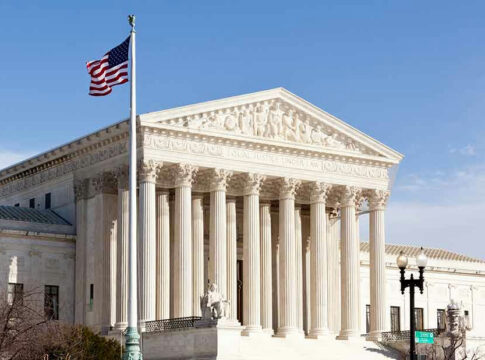
As the Supreme Court prepares its birthright citizenship ruling, a small detail in Executive Order 14160’s design is quietly signaling that many insiders expect bad news for the order—and possibly for millions of families watching the case.
Story Snapshot
- Executive Order 14160, Trump’s move to narrow birthright citizenship, is fully blocked but still headed for a major Supreme Court ruling.
- The order was written to apply only to future births after a 30‑day window, a structure many see as a sign the administration expected an uphill legal fight.
- Courts and experts across the spectrum say only a constitutional amendment—or a radical Supreme Court reversal—can cut back 14th Amendment citizenship.
- Both conservatives and liberals see the battle as proof that political elites are willing to gamble with basic rights while everyday Americans bear the risk.
How Executive Order 14160 Put Birthright Citizenship on the Line
President Donald Trump signed Executive Order 14160, “Protecting the Meaning and Value of American Citizenship,” on January 20, 2025. The order tells federal agencies not to treat certain babies born in the United States as citizens if their mother is here illegally or only on a temporary visa and their father is not a citizen or permanent resident. In simple terms, it tries to deny automatic citizenship to the children of undocumented immigrants and many temporary visitors. That directly challenges more than a century of settled law that treats birth on United States soil as enough for citizenship, with only narrow exceptions like children of foreign diplomats.[4][8][9][12]
Federal courts quickly stepped in and blocked the order nationwide. A major appeals court said it “contradicts the plain language” of the Fourteenth Amendment’s promise of citizenship to all persons born in the United States who are under United States jurisdiction. Judges rejected the administration’s claim that “subject to the jurisdiction” means only people with permanent allegiance and domicile here. Legal analysts point out that the Constitution’s text and long‑standing Supreme Court rulings hold that presidents cannot redefine citizenship by executive order. For now, every child born on United States soil still receives citizenship at birth.[1][3][5][6]
Why the 30‑Day Delay Looks Like a Warning Signal
One feature of Executive Order 14160 is drawing special attention as people brace for the Supreme Court’s decision. The order does not try to strip citizenship from anyone who already has it. Instead, it tells agencies to deny passports and Social Security numbers only to babies born after a 30‑day grace period, starting from the day the order was signed. That pushes the effective date to February 19, 2025, and exempts every child born before that day from its reach. Analysts say this structure looks like a sign that the administration’s own lawyers knew retroactive action would be legally toxic and more likely to be struck down.[7]
Commentators also see the narrow, forward‑looking design as a kind of legal “test balloon.” By targeting only future births in tightly defined categories, the administration invites the Supreme Court to reopen the meaning of “subject to the jurisdiction” without directly attacking current citizens. This lets elites in Washington experiment with the edges of constitutional rights while trying to limit immediate public backlash. For millions of parents, though, the message is chilling: the government is willing to play games with basic status—citizen or non‑citizen—and your child may be the test case. That sense of being used as a pawn feeds the growing belief that the system serves insiders first.[5]
What the Supreme Court Is Really Being Asked to Do
In the Trump v. Barbara case now before the Supreme Court, government lawyers argue that the Fourteenth Amendment’s Citizenship Clause was meant only for freed enslaved people and their children, not for the children of undocumented or temporary visitors. They claim “jurisdiction” requires political allegiance and permanent domicile, which tourists, students, and undocumented immigrants supposedly lack. This view relies on some 19th‑century writers whose narrow reading was never adopted by the Court. Critics say it asks today’s justices to walk away from core Reconstruction‑era promises that were designed to stop government from picking and choosing who counts as American.[5][10]
On the other side, civil rights advocates and many scholars point to United States v. Wong Kim Ark, the 1898 Supreme Court case that confirmed children born here to immigrant parents are citizens. They also highlight later rulings that treat undocumented immigrants and their children as “subject to the jurisdiction” because they must follow United States civil and criminal laws like anyone else. Nonpartisan research groups stress that changing birthright citizenship would normally require a constitutional amendment or a dramatic break with long‑standing precedent. That is why many court watchers read the cautious design of Executive Order 14160—and the push to get the Supreme Court to bless it—as a sign that the administration expects a rough road and is preparing for a possible loss.[3][12][15]
Why Both Left and Right Feel the System Is Playing With Fire
For frustrated conservatives, this fight taps into years of anger over illegal immigration and the sense that politicians ignored border concerns until it became a crisis. Many see birthright citizenship as part of a wider pattern where costs of globalism fall on working Americans while elites enjoy cheap labor and political donations. They ask why Washington waited decades to test the meaning of the Fourteenth Amendment if “anchor babies” were such a threat, and suspect leaders are using the issue now mainly to score points and gain power, not to fix the system.[3][12]
I hope we win the birthright citizenship fight, but if we lose, we must avoid declaring the sky is falling. We’ve lived with it for 158 years and thrived. There are smarter, if less direct, ways to curb its abuse. When the Supreme Court rules against us, it’s time to think and… https://t.co/HYUx9GH6WN
— Heavy Rain (@eepauley) June 30, 2026
For frustrated liberals, the same fight looks like proof that the government is ready to gamble with basic rights of vulnerable families. Executive Order 14160 would create newborns who lack clear status in the only country they have ever known and would depend entirely on shifting political winds. Advocates warn this risks a growing underclass locked out of the American Dream by design. Both sides see something deeper than immigration at stake: if a president can use a single order to rewrite who is “in” and who is “out,” then no right feels truly secure.[3][10][16]
Sources:
[1] Web – Here’s What Some Are Pointing to as a Sign to Prepare for Bad News on …
[3] Web – Trump v. Barbara | Oyez
[4] Web – Barbara v. Donald J. Trump | American Civil Liberties Union
[5] YouTube – Oral Argument on birthright citizenship: Trump v. Barbara
[6] Web – Supreme Court Arguments Wrap in Landmark Challenge to Trump …
[7] Web – CASA v. Trump: Protecting birthright citizenship
[8] Web – Docket for 25-365 – Supreme Court
[9] Web – What Is Birthright Citizenship and Could the Supreme Court End It?
[10] Web – What to know about birthright citizenship ahead of Supreme Court’s …
[12] Web – 8 FAM 102.3 SUPREME COURT DECISIONS – Foreign Affairs Manual
[15] Web – Can birthright citizenship be changed? – Harvard Law School
[16] Web – The Origins of Birthright Citizenship in the United States, Explained
Well we now know how the (not) supremes ‘ruled’ on this critical issue and it ain’t pretty. They have in effect ‘decided’ to reward criminal activity. Prove me wrong.